Building on the Coast
 NOUBIKKO - From Noubi Says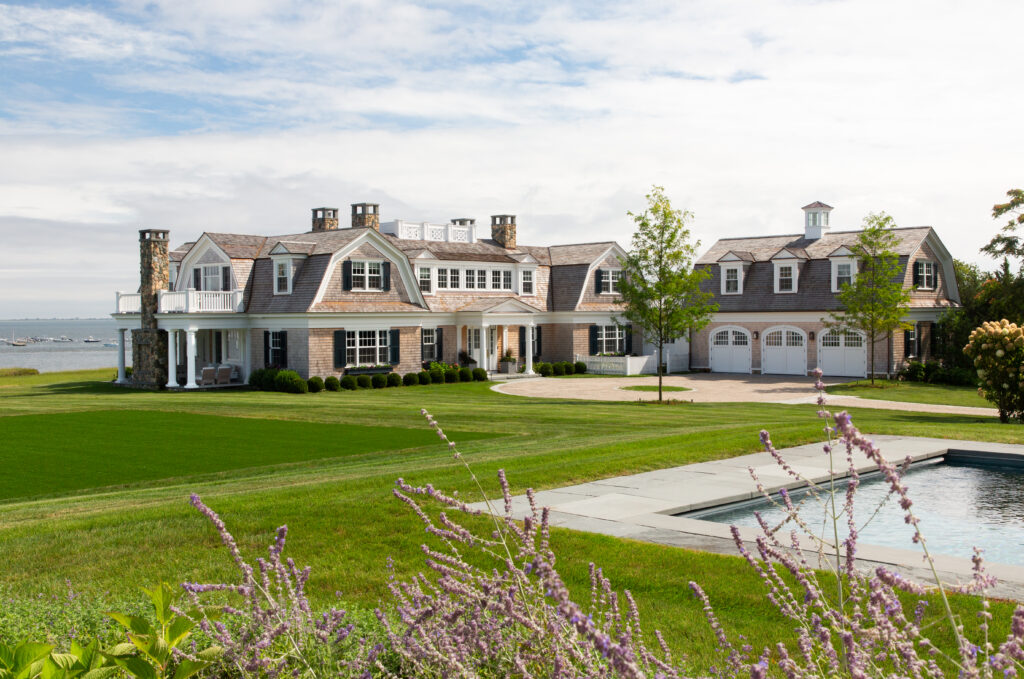
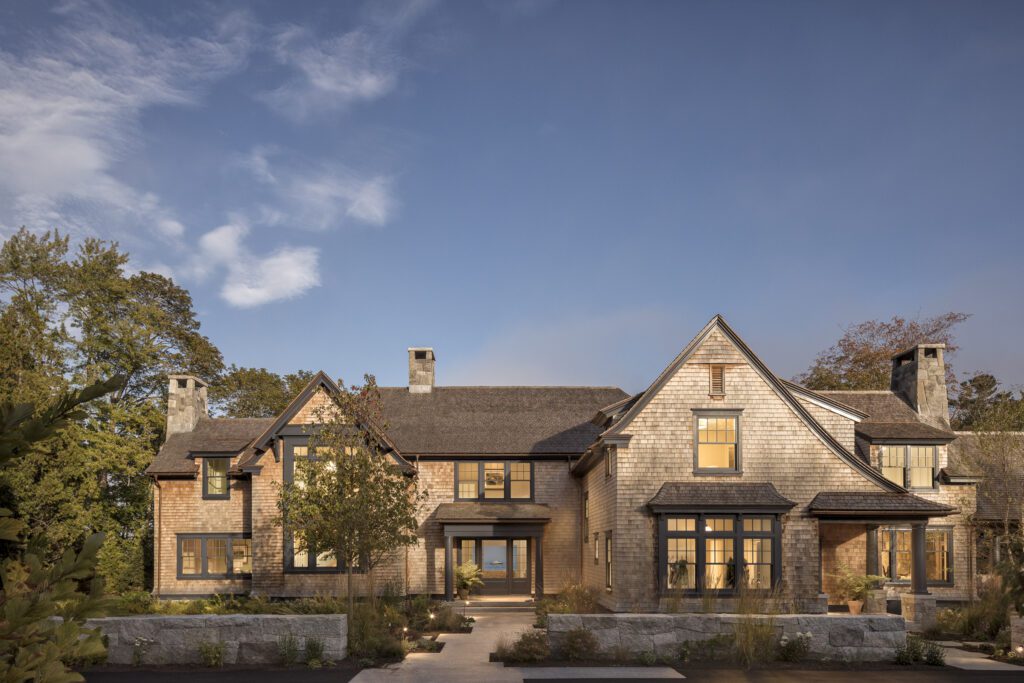
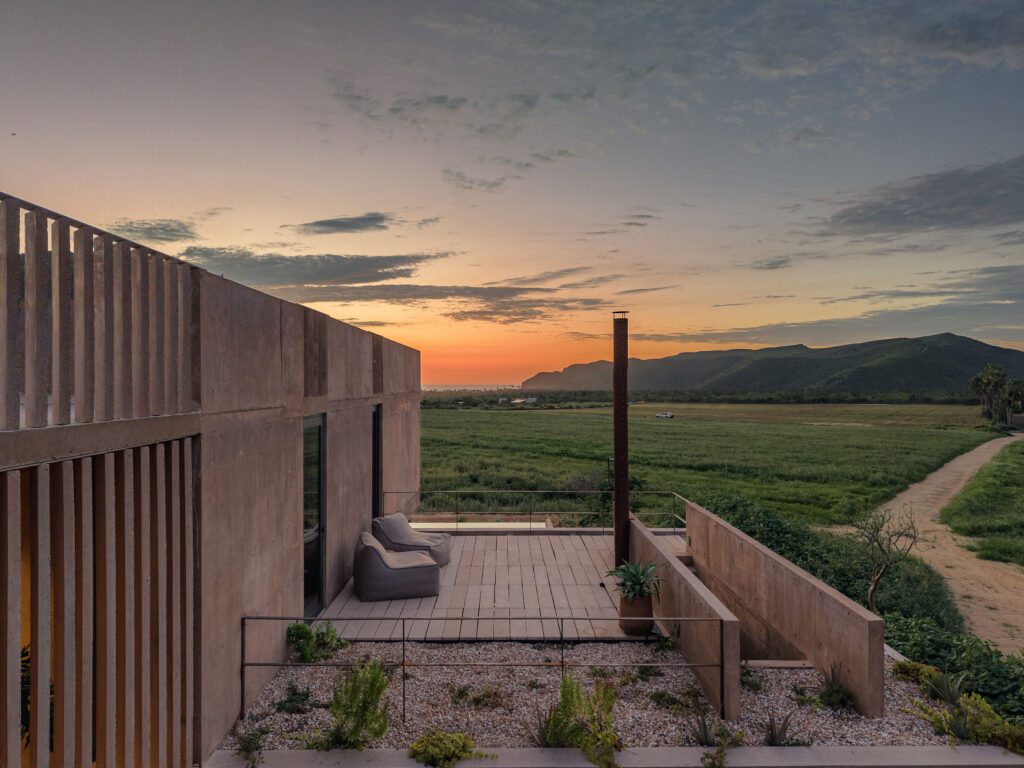
Building along the coast has always required a careful balance between beauty and practicality, but today’s waterfront projects are facing a new level of complexity. Rising flood elevations, evolving insurance requirements, increasingly restrictive zoning regulations, and more frequent storm events are reshaping how architects, builders, and watershape designers approach coastal living.
That reality was the focus of a recent panel discussion hosted by Ocean Home and Luxury Pools + Outdoor Living, where leading experts in architecture and aquatic design explored how the industry is adapting. The conversation was moderated by Ocean Home’s editor, Nancy Berry, and brought together Drew Davis, partner at Kligerman Architecture & Design; Michael Tartamella, managing principal at Patrick Ahearn Architect; and Andy Kaner, president of Aquatic Consultants.
While each participant approached the issue from a different perspective, one theme remained constant throughout the discussion: coastal design is becoming increasingly collaborative, technical, and strategic.
“We’ve definitely seen the regulations become more stringent over the last ten years,” says Davis. “The closer you are to the water, the higher the floor elevation of the house needs to be.”
That shift has dramatically altered how waterfront homes are designed. As flood elevation requirements continue to rise, the available buildable volume on many sites effectively shrinks. In many communities, height restrictions have remained unchanged even as homes are required to sit higher above grade. The result is a more compressed design envelope.
For architects, that means every inch matters.
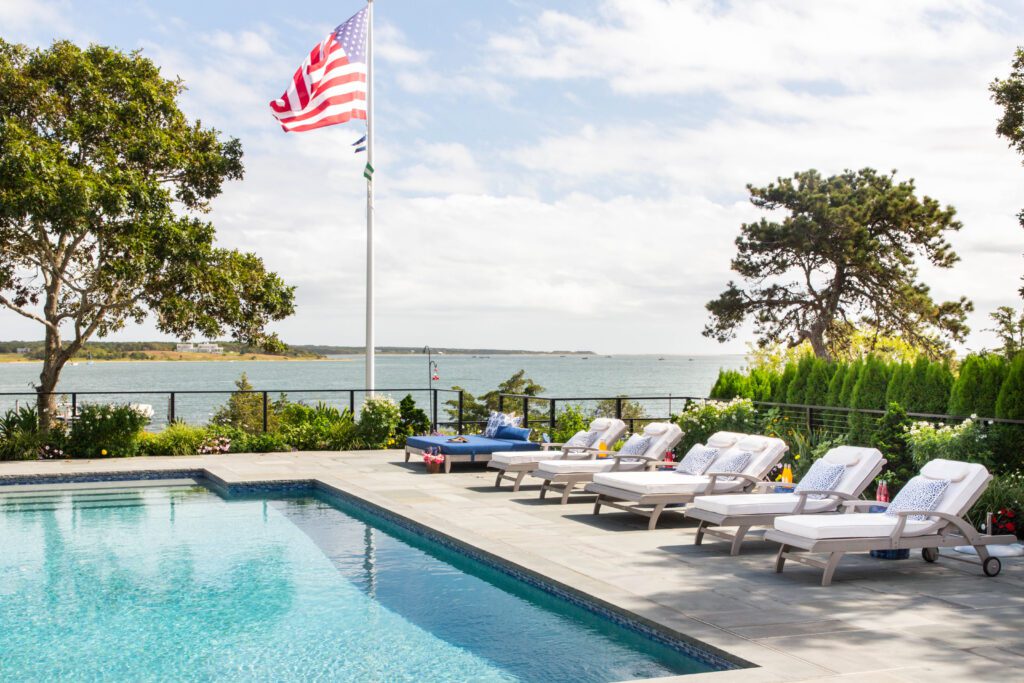
“It becomes challenging,” Davis explains. “But it also becomes the mother of invention in some ways. You become more creative in how to give the house verticality and make it feel planted.”
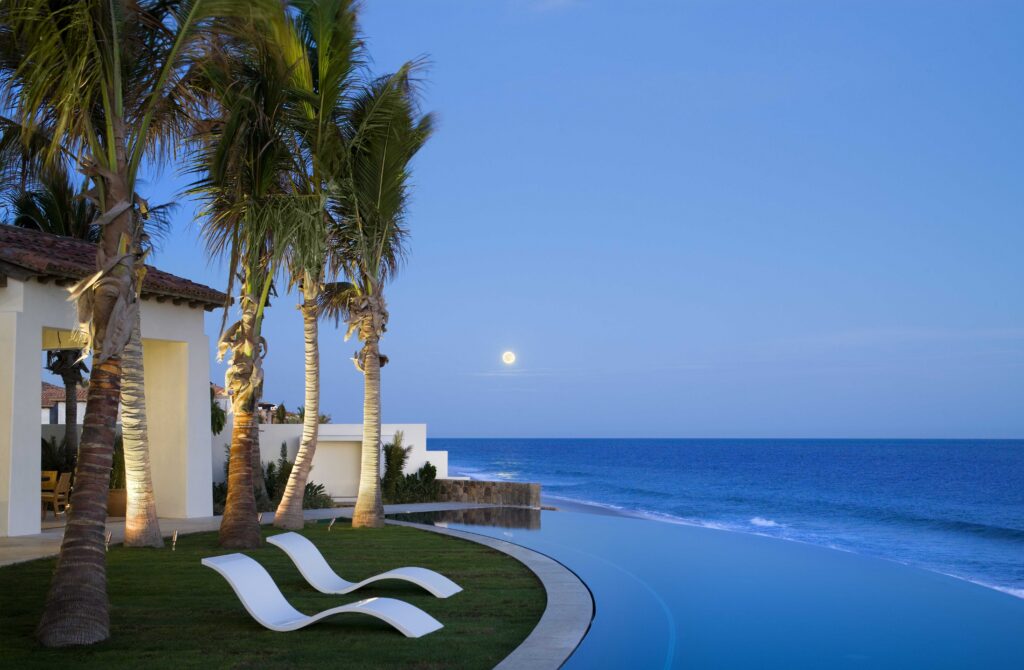
In many coastal regions, the conversation now extends beyond building code alone. Insurance providers are also influencing design decisions by incentivizing homeowners to build above minimum FEMA requirements. Higher elevations often lead to lower insurance premiums, creating additional pressure to raise homes even further.
Tartamella noted that natural disasters continue to shape the evolution of coastal regulations.
“Every time there’s a major event, whether it’s Sandy, Katrina, or another storm, we tend to see changes to building code or adjustments to flood maps,” he says. “Those events inform where we have to adjust.”
For homeowners, the complexity can be surprising.
“I think the key is really to educate clients upfront,” Tartamella says. “You have to do a deep dive into what the site is offering and what you’re able to do.”
That analysis begins long before design concepts are finalized. Teams are now evaluating flood zones, topography, setbacks, height limitations, drainage, utility placement, and shoreline conditions in the earliest phases of planning. According to Tartamella, understanding zoning and environmental limitations early allows architects to identify opportunities instead of simply reacting to restrictions later in the process.
The challenge is especially pronounced on sites where homeowners want strong indoor-outdoor connectivity while also preserving close proximity to the water.
“People still want that connection to outdoor space,” Tartamella explains. “Even if they have to build higher than anticipated, they want access to lawns, pools, terraces, and outdoor living spaces.”
That desire for seamless coastal living is reshaping the relationship between architecture and landscape design.
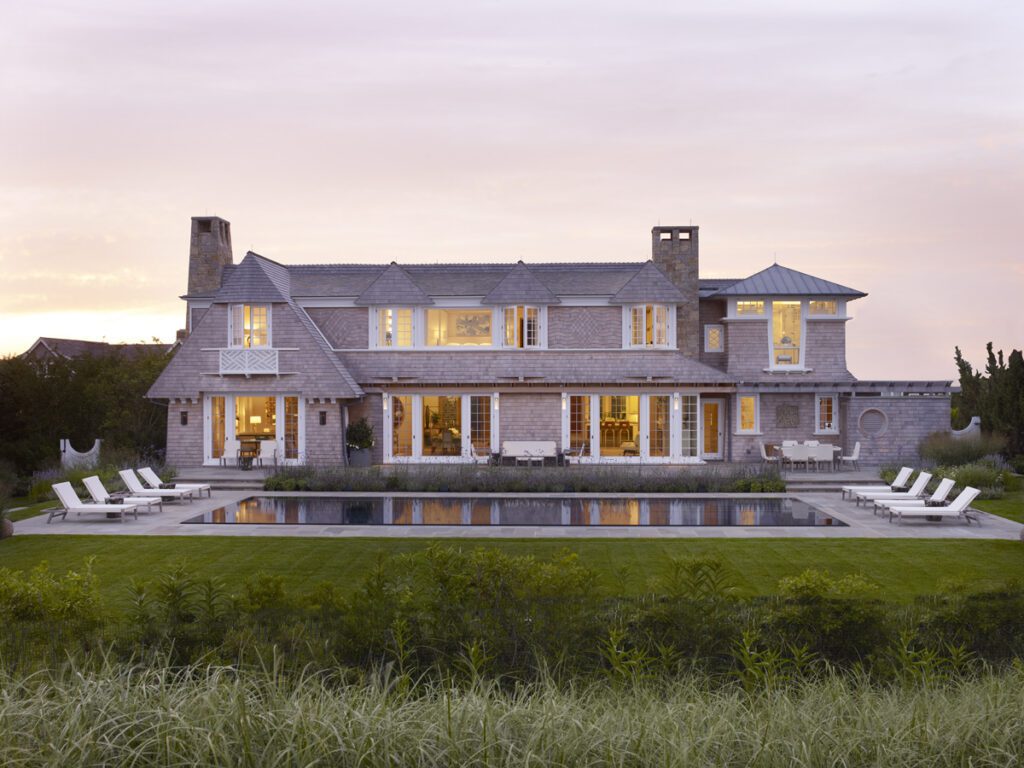
Davis noted that pools are increasingly positioned close to the home because the most desirable outdoor spaces are typically located on the ocean-facing side of the property.
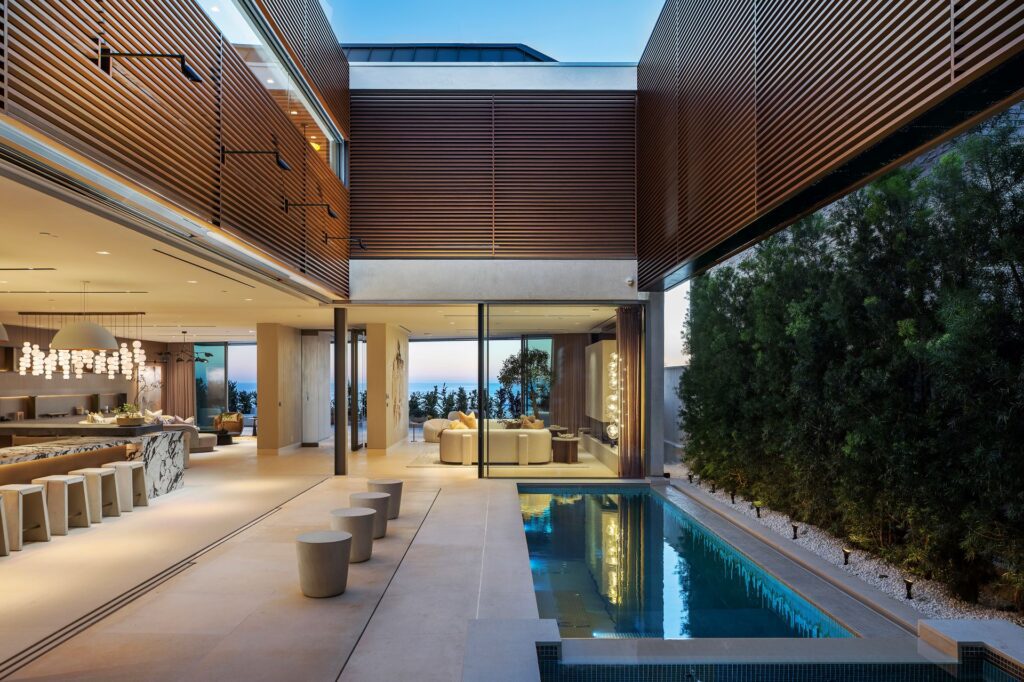
“The relationship between the pool and the house gets really intimate,” he says. “You might have a pool cabana integrated into the home, or the pool located very close to the living spaces.”
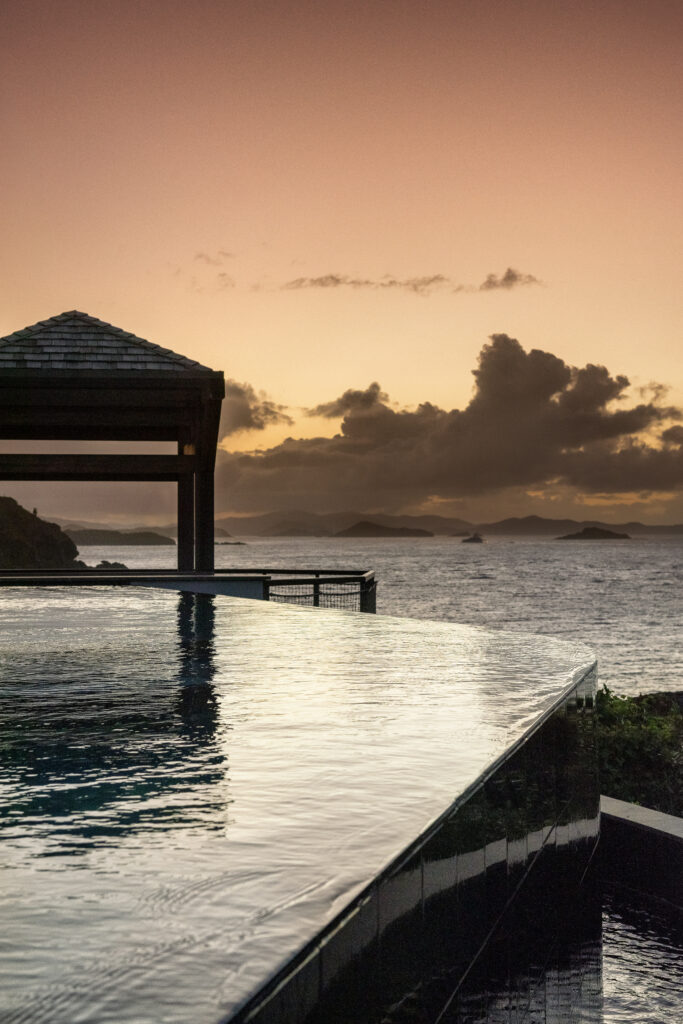
That integration creates opportunities for more immersive indoor-outdoor environments, but it also introduces technical challenges, particularly in coastal flood zones.
Kaner explained that many homeowners arrive with inspiration images featuring vanishing-edge pools or resort-style watershapes, only to discover that floodplain regulations can dramatically limit what is possible.
“In some jurisdictions, you can’t have a structure in certain flood zones unless it’s considered frangible, meaning it can break apart during a storm surge,” Kaner says. “That changes where the pool can go and how it can be designed.”
In many cases, pools can no longer sit flush with the home’s finished floor elevation. Instead, they may need to be lowered into the site or elevated entirely above flood requirements, altering both the engineering and visual experience.
Kaner emphasized that one of the most overlooked aspects of coastal pool design is equipment placement.
“A lot of times, clients don’t think about where the equipment is going until late in the process,” he says. “But in coastal environments, where the equipment goes is critical.”
Floodplain restrictions, limited site access, and challenging topography often dictate where pumps, filtration systems, and mechanical infrastructure can be installed. On remote coastal islands, those issues become even more complicated.
“We work on a lot of remote island projects where water and power are limited resources,” Kaner says. “So we have to think carefully about water conservation, energy efficiency, and long-term operation.”
That includes rainwater harvesting systems, surge-capacity collection basins, variable-speed pumps, and low-consumption operating modes for homes that may sit vacant for extended periods.
Wind exposure is another major consideration. Overflow-edge pools and perimeter-overflow systems can lose substantial amounts of water in high-wind environments.
“We’ve developed protective edge details and gutter systems to help manage those conditions,” Kaner explains.
Beyond the technical requirements, all three panelists emphasized the importance of preserving a sense of place. Even as homes become more resilient and technologically advanced, successful coastal design still depends on creating architecture that feels connected to its environment.
That balance between resilience and livability increasingly defines modern waterfront design.
“There’s always a push and pull,” Davis says. “Clients want the house close to the ocean, but the closer you get, the more restrictive the conditions become.”
For design teams, the solution lies in collaboration.
Architects, engineers, landscape designers, watershape consultants, and local officials are now working together earlier than ever before. The goal is not simply to satisfy code requirements, but to create homes that can withstand changing environmental conditions while still delivering the relaxed, connected lifestyle homeowners expect from the coast.
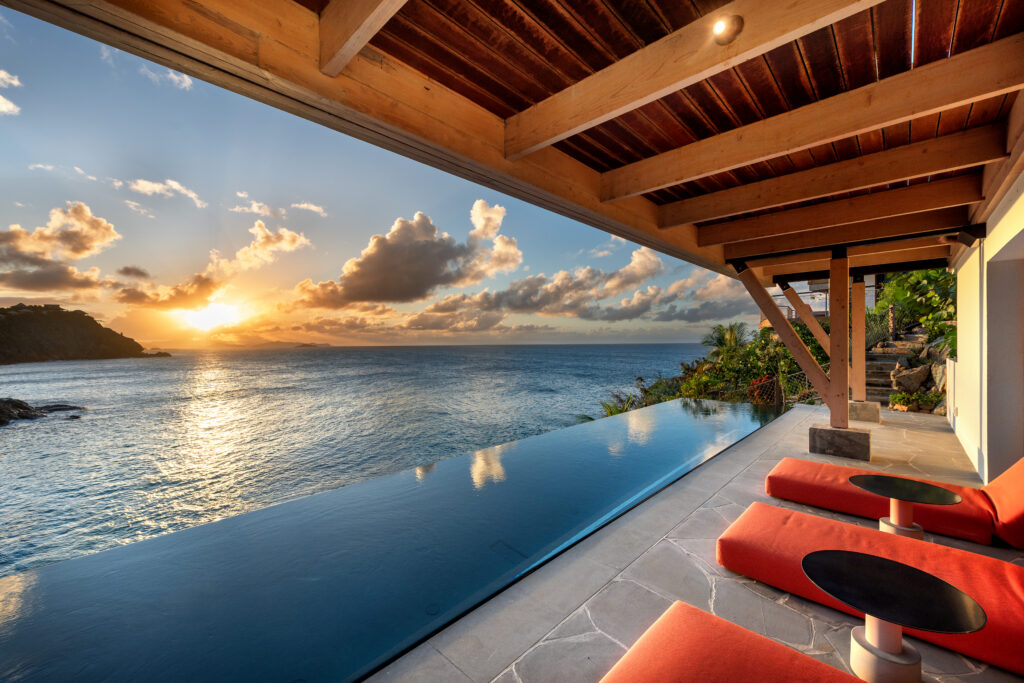
As Tartamella summarized during the discussion, “Zoning dictates design.”
Increasingly, that design process is becoming less about fighting coastal conditions and more about learning how to work with them.
The post Building on the Coast appeared first on Ocean Home magazine.