Potato and Cottage Cheese Pierogi
 Tomas Kauer - News Writer and Moderator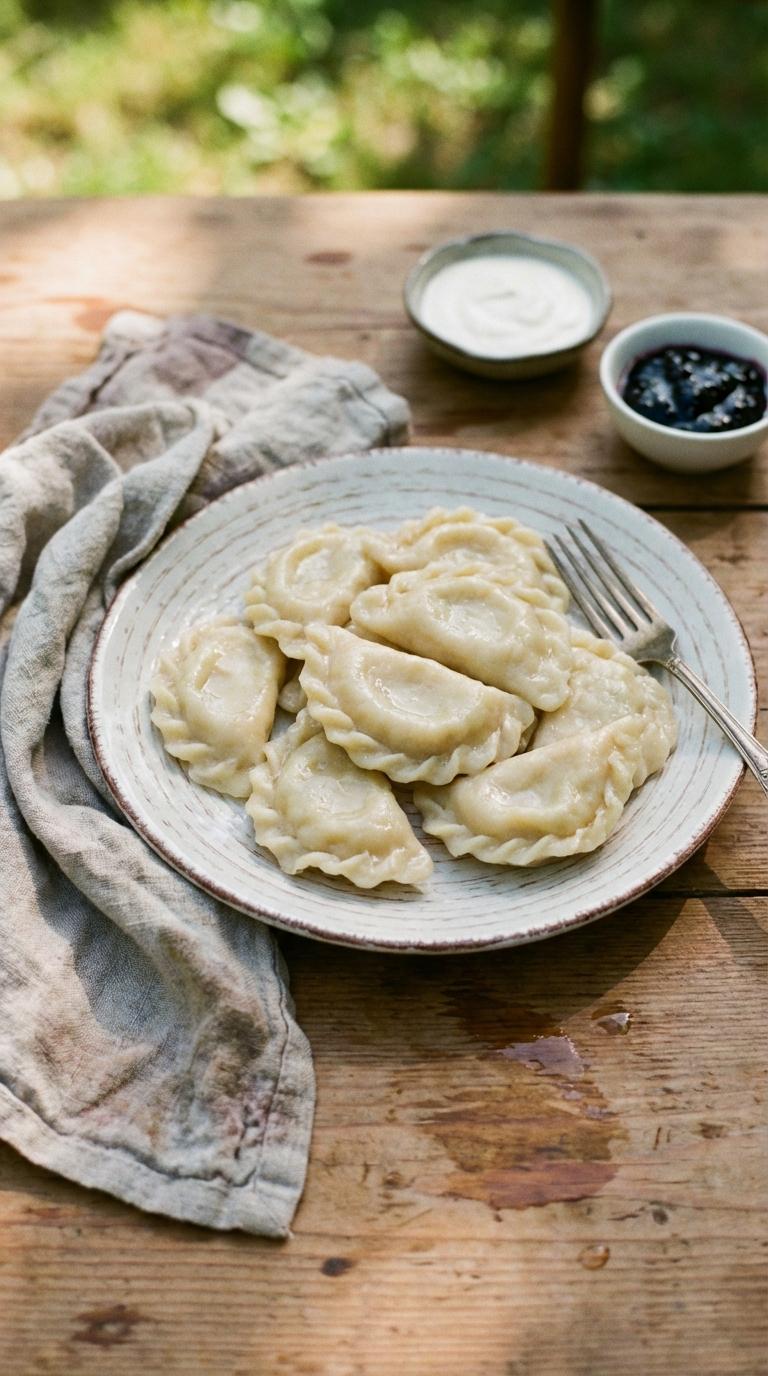
Pierogi are Polish dumplings: rounds of soft dough folded over a potato and cottage cheese filling, boiled, then usually fried in butter. They are also a project, and that is part of the appeal. You make the dough, let it rest, boil the potatoes, cook down the onion, mash everything with cottage cheese. Then spend a companionable hour filling and crimping. Many Polish families make pierogi in large batches for holidays. Expect 50 to 60 dumplings from this batch, so plan accordingly or halve the quantities for a smaller batch.
Sour cream and currant jelly on the side is traditional for good reason: the tang and sweetness cut straight into the richness of the filling. Roll the dough as thin as you can without tearing it: thick dough overwhelms the filling and turns chewy when boiled. Brush the edges with water and press firmly to seal, checking each one before it goes into the pot. Once they float to the surface, they’re done. Cooked pierogi can also be pan-fried in butter until the outsides are golden and slightly crispy, which is the best way to handle leftovers. Freeze uncooked pierogi in a single layer on a sheet tray before bagging them up: they cook straight from frozen with just a few extra minutes in boiling water.
Make the Dough and Prepare the Potato-Cottage Cheese Filling
Mix flour, oil, cold water, and salt into a soft dough, then cover and rest for 30 minutes. Meanwhile, boil and mash the potatoes, cook the chopped onion in butter with a tablespoon of water until tender, then blend into a puree. Combine the cooled mashed potatoes, onion puree, and cottage cheese, seasoning with salt and black pepper.
Cut, Fill, and Seal the Dumplings
Roll the dough on a floured surface as thin as possible without tearing. Cut circles about 3.5 inches in diameter using a cup or cookie cutter. Place several teaspoons of filling in the center of each circle, brush the edges with water, then fold into a semi-circle and crimp the edges firmly so no filling escapes.
Boil the Pierogi and Serve
Drop several pierogi at a time into a large pot of boiling water. They will sink, then rise to the top when done, usually after a few minutes. Serve immediately with sour cream and currant jelly. Print

Potato and Cottage Cheese Pierogi
-
 Total Time: 80 minutes
 -
 Yield: Makes 50-60 pierogi
 Print Recipe
 Pin Recipe
Description
Traditional Polish pierogi filled with a savory mixture of potatoes, cottage cheese, and onions, perfect when served with sour cream and currant jelly.
Ingredients
- 4 cups flour
- 1/2 cup oil
- 1 cup cold water
- 1 tsp salt
- 3 large potatoes, boiled
- 1 medium onion, chopped
- 1-2 Tbsp butter
- 1 Tbsp water
- 16 ounces cottage cheese
- Salt, to taste
- Black pepper, to taste
Instructions
- To make the dough, mix the flour, oil, cold water and salt until a soft dough forms. Cover it with a towel and let it rest for thirty minutes before rolling it out.
- To prepare the filling, boil the potatoes until they are soft. Peel off the skins and mash the potatoes. Let them cool. In a separate pan, melt the butter over medium heat. Add the chopped onion and cook them until they are tender, adding the water as they cook to help keep them soft. Chop up the cooked onion into a purée with a blender or a knife. Combine the cold mashed potatoes, onion purée and cottage cheese in a bowl. Season the filling with salt and pepper to taste.
- Roll out the dough on a lightly-floured surface as thinly as possible without it tearing. Using a cup or a cookie cutter, cut out circles that are roughly 3 1/2 inches in diameter. Working with the circles one at a time, spoon several teaspoons of filling in the center of the circle. Brush the edges of the dough with water. Fold the circle over to make a semi-circle, sealing the dough and crimping the edges together with your fingers. Make sure that no filling is leaking out of the edges and that the dough is not torn.
- To cook the dumplings, place them several at a time in a large pot of boiling water. They will sink and touch bottom. Let them cook for several minutes until they rise to the top. Serve them immediately with sour cream and currant jelly.
- This recipe yields 50-60 pierogi depending on how thinly you roll out the dough. I made a smaller batch by cutting the dough in fourths and the filling in thirds.
Notes
- Rest the dough for 30 minutes before rolling — this relaxes the gluten so it doesn’t spring back and turn chewy.
- Roll the dough as thin as you can without tearing it; thick dough overwhelms the filling and turns tough when boiled.
- Freeze uncooked pierogi in a single layer on a sheet tray before bagging them — they boil straight from frozen with just a few extra minutes.
- Leftover boiled pierogi are better pan-fried in butter until golden than reheated in the microwave.
- Prep Time: 60 minutes
- Cook Time: 20 minutes
Nutrition
- Serving Size: 1 serving
- Calories: 250
- Sugar: 1
- Sodium: 300
- Fat: 10
- Carbohydrates: 35
- Fiber: 2
- Protein: 8
Frequently Asked Questions
Can I freeze pierogi after making them?
Yes. Lay the uncooked or cooked pierogi in a single layer on a baking sheet and freeze until solid, then transfer to a freezer bag. Boil from frozen and give them a couple of extra minutes.
Why do I need to rest the dough for 30 minutes?
Resting allows the gluten in the flour to relax, which makes the dough easier to roll thin without springing back. Skipping this step makes the dough harder to work with.
Can I use ricotta instead of cottage cheese in the filling?
Ricotta is a reasonable substitute and gives a slightly smoother texture. Drain it well first to avoid a watery filling. The flavor will be milder than with cottage cheese.
If You Liked This Recipe, You’ll Love These
- Cheese and Potato Pierogi with Fried Leeks
- Loaded Potato Pierogis with Bacon Mushrooms
- Onion and Potato Pierogi
- Pierogi Quiche
The post Potato and Cottage Cheese Pierogi appeared first on Honest Cooking and Travel.