Watermelon, Feta, and Basil Salad
 Tomas Kauer - News Writer and Moderator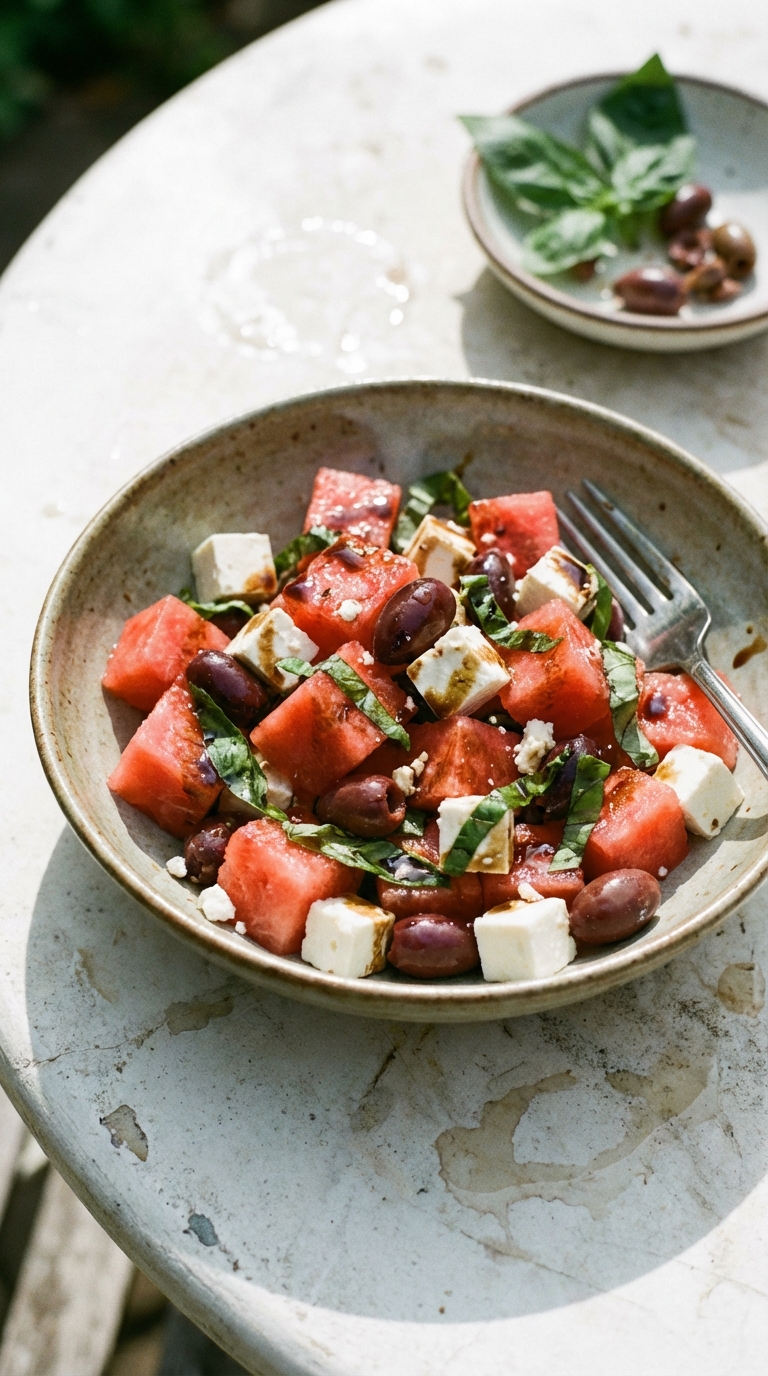
Why does watermelon work with feta? Because the salt in the cheese pulls out the sweetness in the melon, and together they taste like neither one alone. Two cups of watermelon cubes, half a cup of cubed feta, half a cup of pitted Kalamata olives, basil cut into thin ribbons, and a drizzle of balsamic vinegar. No cooking. Ten minutes.
The olives are what keeps this from being a cliche. Most watermelon feta salads skip them, and the result is flat, sweet, one-note. Kalamata olives are briny and pungent, and they push the salad into something you actually finish instead of abandoning after a few bites. This is one of my favorite things we make all summer.
Tips for Making Watermelon, Feta, and Basil Salad
Cut the basil into chiffonade
Stack the basil leaves, roll them tightly like a cigar, and slice thin strips perpendicular to the roll. This is a chiffonade. It releases flavour without bruising the leaves into a dark paste.
Use the basil immediately after cutting. The cut edges darken fast and lose their brightness.
Serve immediately after dressing
The balsamic vinegar starts pulling water out of the melon as soon as it touches. Toss and serve within a few minutes.
If you need to prep ahead, keep the watermelon, feta, and olives in the bowl and add the basil and vinegar at the last moment.
Watermelon, Feta, and Basil Salad
-
 Total Time: 10 minutes
 -
 Yield: 6 servings
 Print Recipe
 Pin Recipe
Description
Light, sweet, juicy melon makes a strangely delicious contrast to the rich, salty, pungent feta and herbal basil.
Ingredients
- 2 cups watermelon cubes (1 1/2-inch cubes from about 1/4 medium to large seedless melon)
- 5 1/2 ounces feta cheese, cut into 1-inch cubes (about 1/2 cup)
- 1/2 cup pitted Kalamata olives
- 2 tablespoons chiffonade of basil leaves
- 2 teaspoons balsamic vinegar
Instructions
- In a large bowl, combine watermelon cubes, feta cheese, and Kalamata olives.
- Add the chiffonade of basil leaves and gently toss to combine.
- Drizzle with balsamic vinegar and toss lightly to coat.
- Serve immediately or chill for a short period before serving.
Notes
Kalamata (also spelled Calamata) olives are purplish-brownish olives from Greece that are salty and pungent.
A chiffonade is a culinary knife cut in which herbs or leafy green vegetables are chopped into long, thin strips. This is accomplished by neatly stacking the leaves, rolling them lengthwise (like a cigar), and slicing them perpendicular to the roll using a sharp knife. The cut edges darken quickly, so use the chiffonade as soon as possible.
- Prep Time: 10 minutes
Nutrition
- Serving Size: 1 serving
- Calories: 150
- Sugar: 8
- Sodium: 400
- Fat: 9
- Carbohydrates: 12
- Fiber: 1
- Protein: 5
Frequently Asked Questions
What kind of feta works best?
Greek feta in brine is the saltiest and creamiest. Cut it into one-inch cubes so it holds its shape in the salad. Pre-crumbled feta is drier and melts into the watermelon juice.
Can I use a different vinegar?
A drizzle of balsamic is traditional. Red wine vinegar or white balsamic both work but taste sharper. Avoid flavoured vinegars, they compete with the basil.
What are Kalamata olives?
A Greek olive variety that is purplish-brown, salty, and more pungent than black olives. Sold pitted or whole. If you buy whole, pit them before adding to the salad.
If You Liked This Recipe, You’ll Love These
- Chickpea and Barley Salad with Feta and Lemon
- Chickpea, Lentil and Tahini Salad with Feta
- Chickpea Salad with Feta and Cilantro
- Peach and Feta Salad with Lavender Dressing
The post Watermelon, Feta, and Basil Salad appeared first on Honest Cooking and Travel.